So foul, in fact, that I could quite happily kill something (in a game).
I want to hack something to death, with sharp implements in some sort of virtual environment.
Oh, what’s this hiding down the back of the sofa?
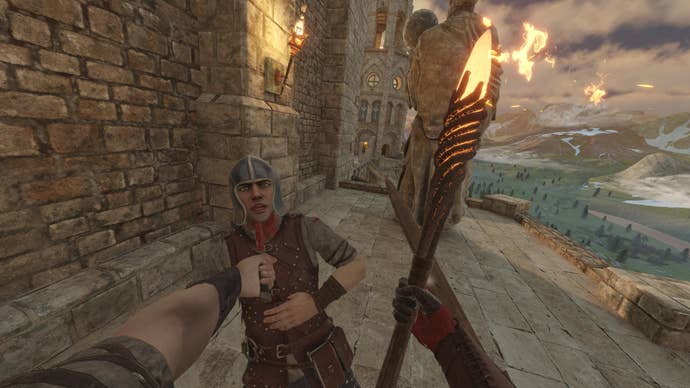
Why, it’sBlade And Sorcery, a VR game about hacking people to death in a virtual environment.
In fairness to Blade And Sorcery, it isn’t just about hacking people to death.
Structurally it’s akin toBoneLab, less a cohesive game and more a sandbox with gamey bits dangling off.

It’s hardly the only game to do this.
Swords and VR go together like economic inflation and mass industrial action.
But Blade And Sorcery literally hits different.
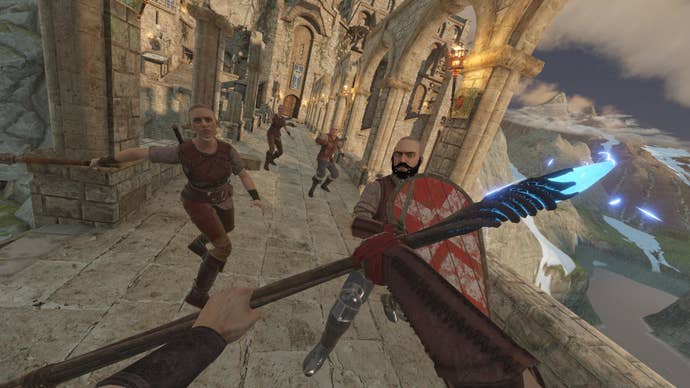
Through detailed physics simulation and acute audio-visual feedback, the resulting fighting system is incredibly tangible.
But there’s more to this depiction of how blades interact with bodies than simple depravity.
That same granularity is applied to every material in Blade And Sorcery.
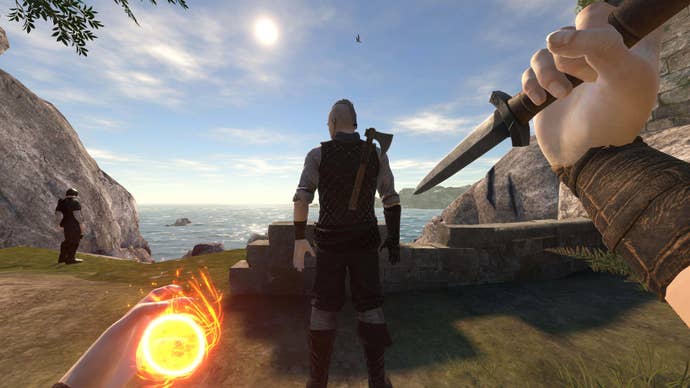
The intricate simulation also means fights are wonderfully scrappy.
The times you’ll defeat an enemy with a perfectly executed swing are rare.
And all this only refers to the “Blade” bit of Blade And Sorcery.
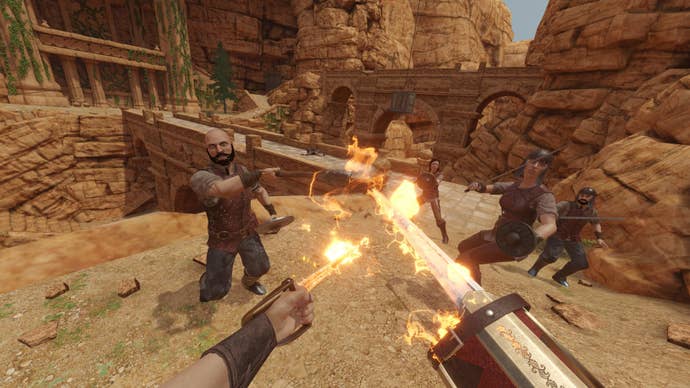
you’re able to also use weave spells into your fighting style.
On top of all this is an extremely generous bullet-time (should that be arrow-time?)
ability, which both makes combat easier and lets you admire your horrible handiwork in gruesome detail.
The big difference (apart from the VR anyway) is that Dark Messiah offers a properly structured adventure.
How you use those tools to create entertainment is up to you.
At least, that was the case until recently.
Last year, developer WarpFrog added a new map the Outpost.
It’s a fantastic space to explore, even if it’s still largely devoid of context.
And it’s important to bear in mind that Blade And Sorcery still isn’t finished.
But it’s also capable of producing the kind of open-ended action sequences I associate with my favourite games.
