Amazing
Mazes and labyrinths can be confusing, frustrating, oppressive,nightmarish.
But as productions, they can be strangely economical, oddly light-footed.
Mazes and labyrinths, after all, twist up space and as such, discover or create additional spacewithinspace.

But don’t take it from me, an armchair developer with armchair socialist sensibilities.
Take it from The Legend of Zelda.
As such, each room’s tileset has to be available in VRAM simultaneously.
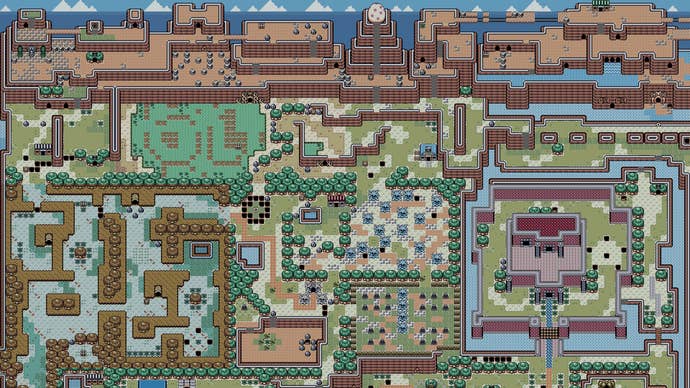
After all, every adjacent room and its tileset would need to be loaded into VRAM at once.
It’s a lesson in how a world needn’t be big to seem huge.
That kind of back-and-forthy, “labyrinthine” design appears in many games.
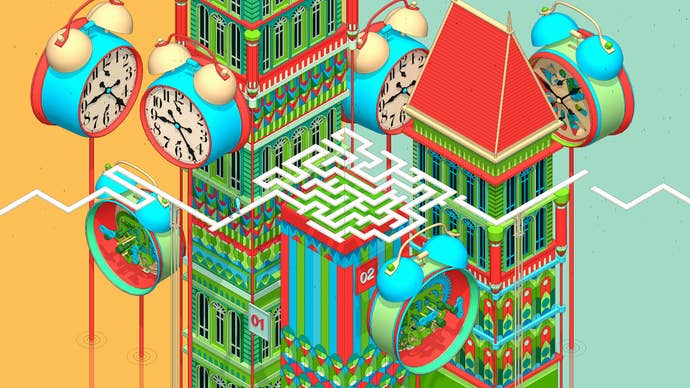
It makes this landscape intriguing, more substantial.
And there is something strangely restful about it that owes something to the present cultural moment.
Perhaps you could even call it therapeutic.
It’s a gentle concentration of my time that lends itself to a broader sense of possibility.
